THE IRWIN SYSTEM™
A language for noticing how thinking moves.
A framework for observation, reasoning, uncertainty, evidence, revision, and return.
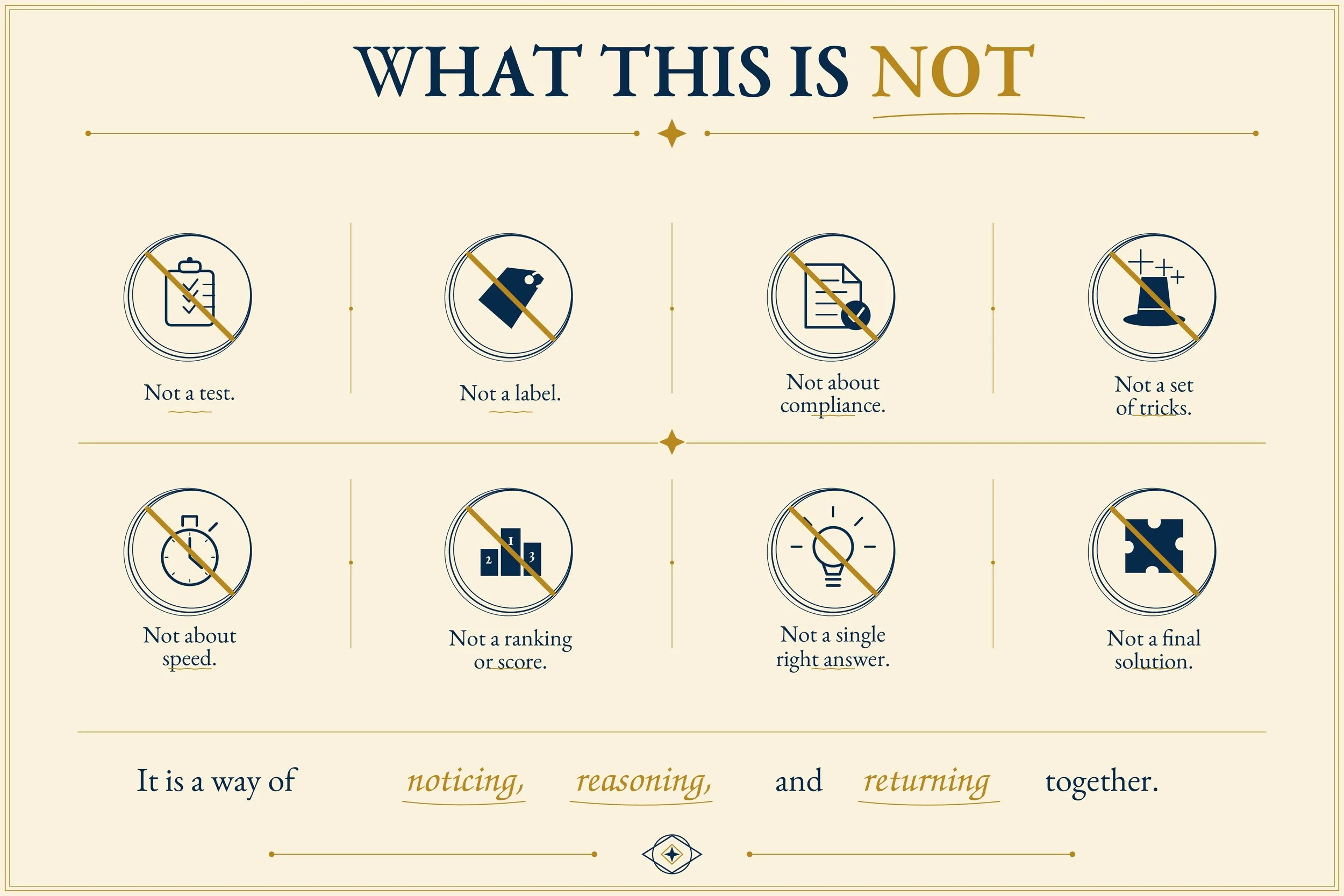
Not a programme.
Not a test.
Not a label for learners.
A way to make careful thinking visible.
New to the work? Begin with a free classroom-ready introduction.
Careful thinking
deserves
careful language.
✦
Start with one classroom encounter.
Try one encounter. Use one or two prompts. Notice what becomes visible. Record only that encounter. Return if useful.
What Else Could Be Going On?
A free classroom-ready introduction to The Irwin System™.
Use one image, one situation and a few carefully chosen questions to help learners separate what they notice from what they think it means, consider another possibility, identify clues and recognise uncertainty.
The pack includes:
• a short teacher guide;
• classroom prompts;
• student-facing material;
• a 20-minute reasoning encounter;
• an observation and reflection rubric.
The rubric records visible reasoning. It does not grade the learner.
The observation and reflection rubric helps teachers record what became visible in one particular encounter. It does not assign a fixed reasoning type, measure the whole learner or turn one response into a judgement about ability.
It helps teachers notice:
• what the learner observed;
• how an explanation was formed;
• whether another possibility was considered;
• what clues were used;
• how confidence was communicated;
• whether thinking was revised or extended.
The record describes the reasoning that became visible under particular conditions. It does not describe everything the learner knows or can do.
Built to sit beneath curriculum
The Irwin System™ does not replace curriculum learning. It helps make the reasoning within curriculum learning more visible.
Schools continue to teach their existing curriculum, local priorities, subject knowledge, learning progressions and assessment requirements.
The curriculum determines what is being learned.
The Irwin System helps teachers and learners notice how reasoning is moving.
Schools can begin lightly, using shared language and a small number of prompts within learning that already exists. Deeper use through structured routines, observation tools, assessment resources, pilots or professional learning should occur only where classroom evidence shows that it is useful.
The framework is designed to support careful adoption without labelling learners, requiring personal disclosure, increasing recording for its own sake or turning every lesson into a fixed procedure.
Use only as much structure as helps people notice and support reasoning more clearly.
Curriculum remains central
The framework works within existing subjects, local curriculum and disciplinary teaching.
Adoption can begin lightly
Schools may start with one distinction, one prompt or one classroom trial.
Learners remain protected
The framework describes visible reasoning. It does not diagnose, label or measure the whole learner.

Featured Collection
The Complete 20-Minute Thinking Challenge Collection™
Seven ready-to-use classroom investigations that make student reasoning visible.
See how learners use clues, consider other possibilities, revise their ideas, and explain how sure they are.
Begin with a noticing. ✦ Follow the reasoning. ✦ Return with care. ✦ Observe carefully. ✦ Think carefully. ✦ Return carefully.
✦
Begin with a noticing. ✦ Follow the reasoning. ✦ Return with care. ✦ Observe carefully. ✦ Think carefully. ✦ Return carefully. ✦